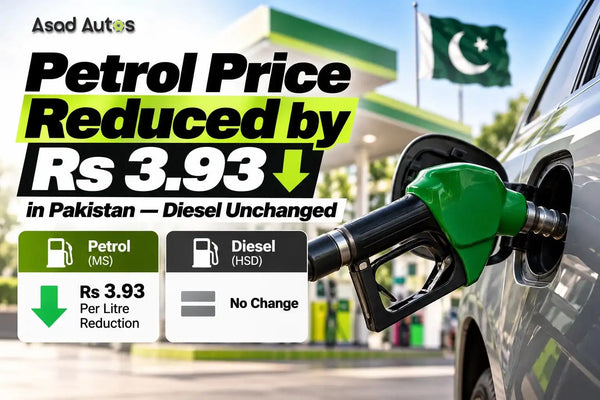
The month of June was not a good one for the energy sector worldwide, but Pakistani motorists received some relief on June 6, 2026, when petrol prices were reduced to Rs. 377.78. That's the fourth reduction since May, which, given everything happening in the Middle East right now, is more than most analysts expected.
Diesel is a different story. High-Speed Diesel stays locked at Rs. 380.78 per litre, unchanged. If you're wondering why one fuel went down and the other didn't, that answer matters, and we'll get to it.
Regardless of whether you commute on a bike, drive a taxi service, or operate commercial vehicles for your enterprise, this change will directly impact your bottom line every month. Here is all that you need to know.
Official Fuel Prices in Pakistan — Effective June 6, 2026
The Ministry of Energy's Petroleum Division issued these revised ex-depot prices on June 6:
| Fuel | Previous Price | New Price | Change |
|---|---|---|---|
| Petrol (Super / MS) | Rs. 381.78/litre | Rs. 377.78/litre | ↓ Rs. 4.00 |
| High-Speed Diesel (HSD) | Rs. 380.78/litre | Rs. 380.78/litre | No change |
Regardless of which company's pump you use — PSO, Shell, Total Energies, Hascol, or Attock Petroleum — you'll pay these exact rates. Fuel pricing in Pakistan is government-regulated, so there's no variation between retailers. More details on regulation can be understood through the Oil and Gas Regulatory Authority OGRA Pakistan.
PSO Petrol and Diesel Price Today
PSO, the largest fuel network in Pakistan, is selling at:
-
PSO Premier Euro 5 Petrol — Rs. 377.78 per litre
-
PSO Hi-Cetane Diesel (HSD) — Rs. 380.78 per litre
Same rates nationwide, same rates as every other licensed outlet. More company updates are available at Pakistan State Oil.
The Big Picture: Reason for Prices to be So Volatile Throughout 2026
In order to comprehend this latest drop, you need to have some perspective as to what has been happening throughout this year.
Initially, Pakistan began the year 2026 with fairly consistent prices of fuels. However, in March of this year, tensions between the USA and Iran increased dramatically. Markets panicked.
The Strait of Hormuz, a narrow chokepoint in the Persian Gulf carrying around 20% of global seaborne oil trade, suddenly seemed like it could be disrupted at any moment. For an import-dependent country like Pakistan, that kind of uncertainty translates almost immediately into higher pump prices.
By April, petrol and diesel were at some of the highest levels seen in years. Then, as the worst-case supply scenarios didn't materialise, things began easing. The government started passing reductions through in May, and June's Rs. 4 cut is the latest in that sequence.
Global crude movement trends can be tracked via the U.S. Energy Information Administration EIA Oil Data.
Here's how 2026 has unfolded at the pump:
| Period | Direction | Driver |
|---|---|---|
| January–February | Stable | Global markets calm |
| March | Sharp rise | US-Iran conflict outbreak |
| April | Continued increase | Strait of Hormuz fears peaked |
| May | Gradual cuts | Market anxiety eased |
| June 6 | Rs. 4 reduction | Softer crude, stable rupee |
The correction is real, but it's been slow and measured. The government doesn't move quickly on fuel prices; there are fiscal considerations on their end too, not just market ones.
Three Factors That Determined This Week's Price
International Crude Softened
Pakistan imports essentially all its refined petroleum. So whatever direction Brent Crude moves, Pakistan follows. A partial easing in global oil prices over the past few weeks gave the government room to reduce domestic rates.
The Rupee Didn't Slip
Fuel imports are settled in US dollars. A weakening rupee inflates import costs even when crude prices are stable. Exchange rate stability supported pricing decisions, as tracked by institutions like the IMF IMF Data.
OGRA's Recommendation Reached the Government
OGRA analyzes international oil trends, import costs, and local economic conditions before forwarding pricing recommendations. Official methodology is available via Oil and Gas Regulatory Authority.
What Rs. 4 Per Litre Actually Means for Your Wallet
The per-litre figure sounds small. But multiply it across a full tank, and across a month of fill-ups, and it becomes real money.
| Vehicle | Tank Size | Saving Per Fill-Up |
|---|---|---|
| 70cc–100cc Motorcycle | 4–5 litres | Rs. 16–20 |
| 125cc–150cc Motorcycle | 8–10 litres | Rs. 32–40 |
| Suzuki Alto / Cultus | 30–35 litres | Rs. 120–140 |
| Honda City / Toyota Corolla | 40–45 litres | Rs. 160–180 |
| Delivery Van / Pickup | 55–60 litres | Rs. 220–240 |
A daily motorcycle commuter filling up twice weekly saves roughly Rs. 130–320 per month. A ride-hailing driver doing the same lands closer to Rs. 300–400. And a business operating 20 delivery vehicles? The monthly savings runs into the tens of thousands.
Why Diesel Wasn't Touched
This is the very question many people have been asking and rightly so.
The diesel powers those parts of the economy that play an immediate role in shaping prices:
-
Long-distance trucks transporting goods
-
Tractors used in agriculture
-
Intercity coaches
-
Backup generators in factories
All of it runs on HSD.
Diesel increases have rapid inflationary effects. Transport costs rise, which then affects food, construction, and manufacturing prices. That is why authorities remain cautious.
Keeping HSD unchanged helps maintain supply chain stability.
Monthly Running Costs at Today's Rates — A Real-World Breakdown
At Asad Autos, the most common question from customers buying a vehicle isn't "what's the price?" it's "what will it cost me to run?"
Here's a practical estimate of monthly fuel bills:
| Vehicle | Fuel Economy | Monthly Distance | Monthly Fuel Cost |
|---|---|---|---|
| Honda CD 70 Motorcycle | 55 km/litre | 1,200 km | ~Rs. 8,240 |
| Suzuki Alto 660cc | 18 km/litre | 1,500 km | ~Rs. 31,480 |
| Honda City 1.2L | 14 km/litre | 2,000 km | ~Rs. 53,970 |
| Toyota Corolla 1.6L | 11 km/litre | 2,000 km | ~Rs. 68,690 |
Mixed city and highway estimates. Real-world figures vary by traffic and driving style.
Where Prices Could Go From Here
Prices fall again
If crude continues easing and the rupee holds, another Rs. 3–5 reduction is possible.
Prices hold
If global markets remain stable, rates are likely to stay unchanged.
Prices reverse
Escalation in geopolitical tensions or currency pressure could push prices upward quickly.
Five Ways to Use Less Fuel — Regardless of What Prices Do
1. Tyre pressure matters more than most people think
Under-inflated tyres increase drag. Correct pressure improves efficiency noticeably.
2. Smooth driving beats fast driving on fuel costs
Aggressive acceleration and braking waste fuel. Planning ahead in traffic improves mileage.
3. Servicing on time keeps fuel consumption in check
Dirty filters and old oil increase fuel burn silently over time.
4. Turn the engine off when you're stopped
Idling wastes fuel without movement.
5. Plan your route before you leave
Using navigation tools like Google Maps helps avoid unnecessary congestion.
Bonus tip: Reduce AC load in hot months
Using sun protection accessories like car sun shades for fuel efficiency can help lower cabin temperature, reducing air-conditioning load and indirectly improving mileage.
FAQs — Petrol Price in Pakistan Today
What is the petrol price in Pakistan today?
Rs. 377.78 per litre, nationwide, effective June 6, 2026.
What is the current diesel price in Pakistan?
Rs. 380.78 per litre. No change in the latest review.
Are prices the same everywhere?
Yes, regulated nationwide pricing applies across all stations.
Why does petrol change so often?
Because global crude oil markets and currency rates shift frequently.
Final Thoughts
The petrol price in Pakistan today is Rs. 377.78 per litre, and the latest adjustment reflects a softer global oil environment combined with stable currency conditions.
However, fuel pricing remains closely tied to international markets, geopolitical stability, and currency performance. Small changes abroad can quickly reshape local costs.
Monitoring global oil trends, currency movement, and regulatory updates remains essential for understanding where prices are heading next.