The Pakistan Petroleum Dealers Association has declined to sell fuel under the government's relief scheme in its current form, citing unresolved questions about how dealers would be repaid the subsidy they hand out.
It is a dispute about mechanism rather than principle and it has stopped a scheme that looked straightforward on paper.
Here's who the PPDA is, why a dealers' association carries this much weight, and what its objections actually amount to. The dispute lands at a time when petrol prices in Pakistan are already a daily pressure for most households.
What Is the Pakistan Petroleum Dealers Association?
The Pakistan Petroleum Dealers Association commonly referred to as the PPDA — is the representative body for petrol pump owners and operators across the country.
Its members sit at the final link in the fuel supply chain. Refineries produce the fuel, oil marketing companies distribute it, and dealers are the businesses that actually sell it to the public from forecourts.
The association's role is to represent those businesses collectively on matters affecting their operations pricing structures, margins, regulatory requirements and, in this case, a government scheme they are being asked to administer.
Why a Dealers' Association Has This Much Leverage
This is the part worth understanding, because it explains why the objection of a trade body has stalled a national scheme.
Fuel subsidies cannot be delivered centrally. There is no government counter where an eligible rider collects Rs 100 per litre. The discount has to be applied at the point of sale, by the person operating the pump.
That makes petroleum dealers not merely stakeholders but the delivery infrastructure itself. A scheme designed without their agreement has no route to the consumer, regardless of how sound the policy is.
What the Petroleum Dealers Association Has Said
The Reimbursement Mechanism
The central objection concerns subsidy reimbursement. Dealers want a defined answer to three questions: who repays them, through what channel, and within what timeframe. Without those settled, they have declined to operate the scheme.
Consultation
The association has also said dealers were not adequately consulted on the scheme's design. That matters practically as well as politically the people running forecourts tend to identify operational problems that are not obvious from a policy document.
Why Reimbursement Is the Whole Argument
A fuel station buys its stock from an oil marketing company at full price, upfront. That is a large sum of working capital tied up in a tank of fuel.
Under the scheme, the dealer then sells some of that fuel at Rs 100 per litre below its value. The difference is money the dealer has spent and not recovered effectively an interest-free loan to the government, growing with every subsidised sale.
On a busy station serving eligible customers all day, that balance builds quickly. If repayment is slow, a dealer can reach the point of being unable to fund the next delivery. That is the risk behind the objection: not reluctance to help, but a real possibility of running out of cash.
What Is the Fuel Relief Scheme?
The scheme provides Rs 100 per litre in relief to a defined group of vehicles, rather than lowering pump prices for everyone.
Eligibility covers motorcycles, rickshaws and other three-wheelers, and cars up to 800cc, with monthly limits that differ by vehicle category.
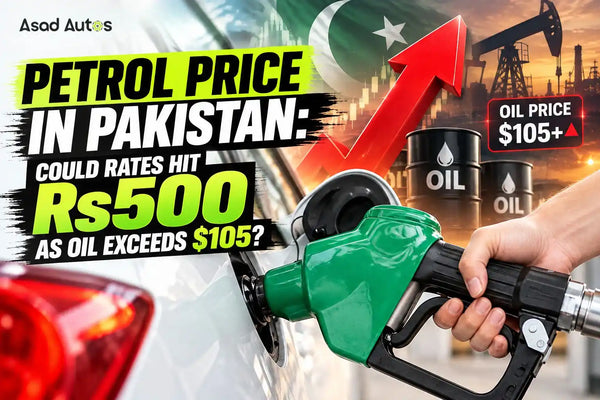
The targeting is sensible enough these are the vehicles used by the households that fuel increases hit hardest. For context on the rates the relief is measured against, see our coverage of the latest petrol price in Pakistan.
Where Things Stand Now
The government has engaged with dealers to explain the payment mechanism, which suggests the gap may be narrower than the public positions imply.
One point worth clarifying, because it has caused unnecessary worry: dealers have declined to participate in the subsidised element of the scheme. Petrol stations continue selling fuel normally at standard prices.
For eligible users, the practical position is that the relief is not currently available at the pump. Follow official announcements rather than forwarded messages, which in situations like this tend to be wrong and are sometimes deliberately fraudulent.
What Happens Next
The resolution almost certainly lies in a clearly defined reimbursement process a named payer, a specified channel and a committed timeframe. Once dealers can see when their money returns, the commercial objection largely disappears.
There is a wider lesson in it too. Schemes that depend on private businesses to deliver public benefits need those businesses involved at the design stage, not presented with the finished plan. Consulting the people who operate the system is cheaper before launch than after.
Final Thoughts
The Pakistan Petroleum Dealers Association is not opposing fuel relief it is asking who repays the dealers who fund it at the counter, and when. Given that a station ties up its own working capital in every subsidised litre sold, that is a reasonable question rather than an obstruction. Until the reimbursement mechanism is settled, eligible users should treat the Rs 100 discount as unavailable and watch official announcements for updates. Normal fuel sales are unaffected throughout.
15+ years in business · In-house fitting in Multan · Nationwide delivery · Exact-fit products, never universal
Browse Car Accessories in Pakistan →Questions about what fits your car? Contact us — 0321-1117525 · Open Mon–Sun, 9am–9pm.